.jpg)
July 3 & 5, 2012:
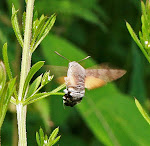
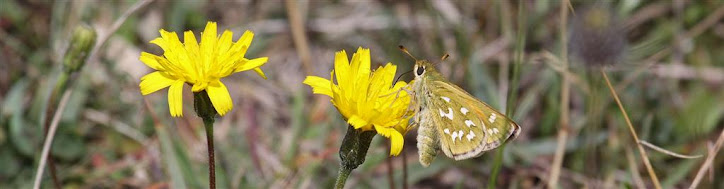
Almost continuous poor weather has meant that opportunities to see and photograph insects has been restricted to brief impromtu outings whenever a few hours of favourable conditions occurred. There have been just two of these this past week. At Latterbarrow on the 3rd, a few Northern Brown Argus were flying in areas where Rockrose was present, whilst a beautiful small day-flying Pyrausta moth (probably P. purpuralis) and in pristine condition, took up territory in one small area. There were also Silver Y and Six-spot Burnet moths and several Small Peacock butterflies and many nymphs of the Common Green Grasshopper.
.jpg)
.jpg)
Northern Brown Argus
.jpg) |
| Pyrausta cf purpuralis |
At Meathop Moss two days later, the weather was hot and humid with briefs spells of sushine. At least 50 individuals of the Large Heath butterfly (ssp davus) were flying but were usually reluctant to settle.

Large Heath (subsp. davus)
Also two individuals of the nationally-scarce moth, the Mancheter treble-bar (Carsia sororiata) were seen as well an equally scarce Purple-bordered Gold (Idaea muricata). Other moths which were much more frequent included Clouded Buff (Diacrisia sannio), Common White Wave (Cabera pusaria) and Common Heath (Ematurga atomaria). Nymphs of the Bog bush-cricket were also in evidence until all activity was brought to a sudden halt for the day by a violent thunderstorm..jpg)
Manchester treble-bar
.jpg) |
Purple-bordered Gold
Clouded Buff
.jpg)
Common White Wave

Common Heath
 |
Bog bush-cricket nymph, female
[Thanks for your help with the moths Graham]
[Thanks for your help with the moths Graham]